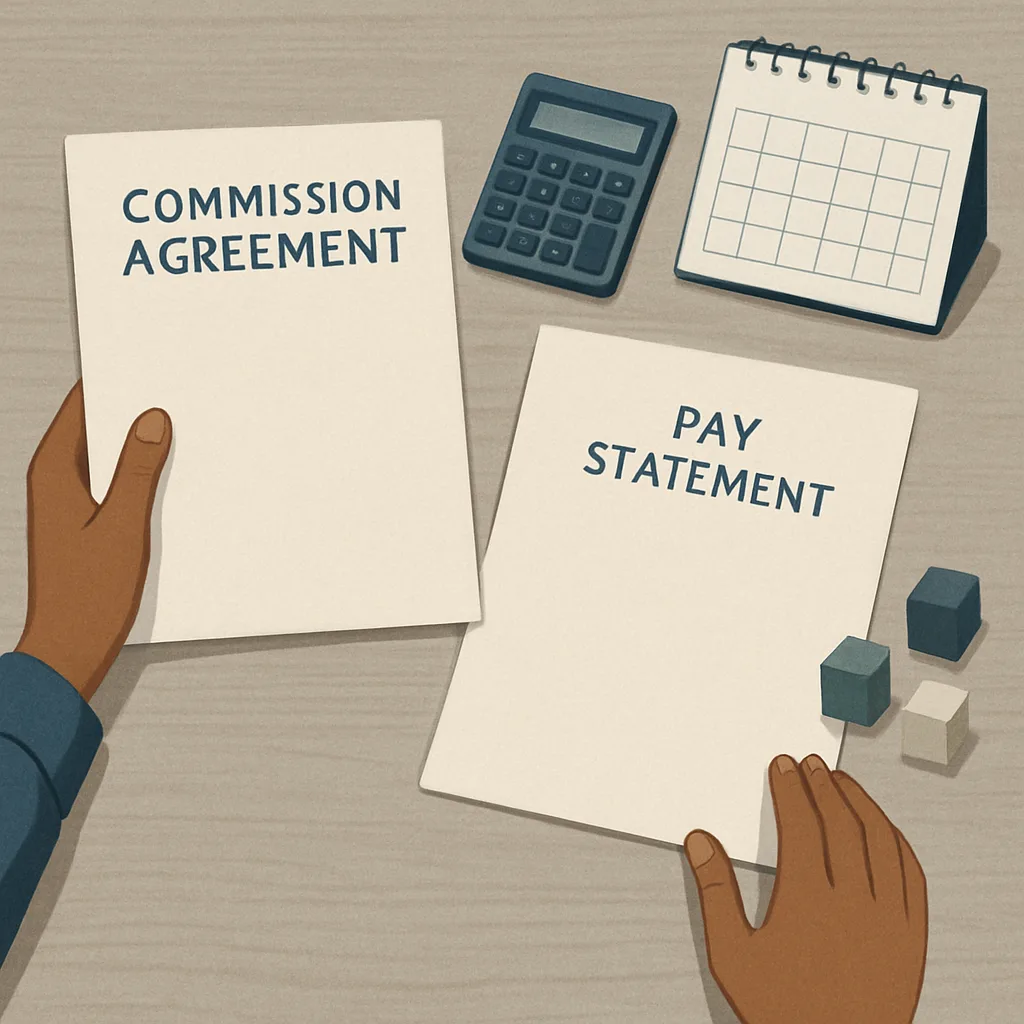
A bonus can look like a separate line on a paycheck, but that does not always mean it is separate from the overtime calculation. If you work more than 40 hours in a workweek and receive a production bonus, attendance incentive, or sales commission, you may wonder: How Can Houston Bonuses Change Your Overtime Pay Rate?
The answer often depends on why the payment was made, how the payment was promised, and which workweek it covers. Overtime eligibility and the correct regular rate are separate questions. Workers can review the firm’s overview of Houston unpaid overtime rights for the broader foundation before examining incentive pay.
Moore & Associates helps workers understand how compensation structures may affect wage-and-hour claims. This article explains when bonuses and commissions may need to be included in the regular rate, uses paycheck examples, and lists the payroll and compensation records worth preserving in Houston, Texas.
How Houston Bonus Overtime Calculation Uses the Regular Rate
For many nonexempt employees, overtime is based on a regular rate rather than only the stated hourly wage. Generally, the regular rate includes compensation for work unless a specific exclusion applies. A nondiscretionary payment—one promised in advance or tied to measurable production, attendance, quality, sales, or performance—may need to be included even if payroll lists it separately.
Weekly production bonus example
Assume a Houston employee earns $20 per hour and works 45 hours in one workweek. Without another payment, the five overtime hours may be paid at $30 per hour, or $150 in overtime wages.
Now assume the employee also earns a promised $100 weekly production bonus covering that same 45-hour week. The bonus produces an additional $2.22 per hour in regular-rate compensation ($100 divided by 45 hours). The adjusted regular rate is about $22.22. The overtime premium is generally 0.5 times that adjusted rate when the employee has already received straight-time pay for all hours, creating an additional overtime premium of about $55.56 for five overtime hours. The exact calculation can vary with the compensation plan and the way straight-time wages were paid.
This is why a bonus that appears correctly on a pay stub may still be missing a related overtime adjustment. For more detail about Texas rules on bonus overtime eligibility, workers should examine whether the payment was promised, measurable, and connected to work performed.
Which payments may be included?
Payments commonly requiring closer review include:
- Production or productivity bonuses promised under a plan
- Attendance, reliability, or punctuality bonuses announced in advance
- Quality, safety, or performance incentives tied to objective standards
- Commissions earned through sales or other work activity
- Shift, project, or completion bonuses connected to services performed
A truly discretionary gift may be treated differently when the employer retains genuine discretion over whether to pay it, the amount, and the timing. Labels such as “bonus” or “incentive” do not decide the issue by themselves.
Do Sales Commissions and Production Pay Increase Texas Overtime?
Commission-based compensation creates additional questions. A commission may be part of the regular rate because it compensates the worker for sales or services. In other situations, a special overtime method or exemption may be relevant, depending on the employee’s duties, pay structure, industry, and applicable law. Commission pay does not automatically eliminate overtime eligibility.
For example, suppose a salesperson in Houston earns $15 per hour, works 44 hours, and receives a $220 commission attributable to sales made during that workweek. The commission adds $5 per hour to the regular rate ($220 divided by 44 hours), producing an adjusted regular rate of $20. If straight-time pay has already covered all 44 hours, the additional overtime premium for four overtime hours may be approximately $40, rather than merely paying an overtime premium based on $15 per hour. The plan and timing of the commission must be examined carefully. See how commissions can change Houston overtime pay for a related discussion.
Being paid based on output raises a similar issue. A worker paid per unit, delivery, job, or completed task may still have overtime rights. Texas piece-rate and production-pay overtime rules can help distinguish piece-rate earnings from a separate weekly production bonus.
When reviewing a Houston payroll system, consider whether:
- The payment was earned during the same workweek as the overtime.
- The employer allocated a bonus covering several weeks across the correct periods.
- The pay stub shows only the bonus and omits a corresponding overtime adjustment.
- The employer used a compensation plan that changes the calculation method.
- The worker’s job duties or industry create a potentially different rule.
Federal wage-and-hour rules may apply in Houston, while Texas requirements and enforcement procedures can also matter. Laws and interpretations vary by location and may change, so a current review of the applicable facts is important.
What Houston Workers Should Check Before Challenging an Overtime Calculation
A payroll discrepancy may involve more than a missing bonus adjustment. Time can be omitted, rounded, edited, or assigned to the wrong workweek. Workers comparing pay should review Houston timecard changes and missing overtime hours alongside bonus and commission records.
Practical payroll and compensation records checklist
Preserve copies, where lawfully available, of:
- Pay stubs showing hourly wages, salary, bonuses, commissions, and deductions
- Timecards, punch records, schedules, and written workweek definitions
- Bonus plans, commission agreements, employee handbooks, and policy updates
- Sales reports, production reports, quota records, and incentive statements
- Offer letters, employment agreements, and messages about eligibility or targets
- Emails or texts discussing overtime, timekeeping, corrected punches, or payroll
- Personal notes identifying dates worked, hours, supervisors, and payments received
The firm’s guidance on pay and workplace records for a Houston overtime review offers a broader evidence-focused framework. Workers should avoid altering original records and should preserve documents in an organized way.
What to do after finding a possible underpayment
Create a week-by-week comparison of hours, base wages, incentive payments, and overtime shown on the pay stub. Do not assume every difference proves a legal violation; the compensation plan, job classification, and payment terms may affect the analysis. Depending on the circumstances, a worker may raise a payroll question with the employer, seek clarification about the calculation, or consult counsel about the Houston unpaid wages claim process.
Prompt review can matter because Texas deadlines for unpaid overtime claims may limit how far back a claim can reach. Potential deadlines can depend on the governing law and facts, so workers examining recurring bonus or commission issues should avoid unnecessary delay.
Frequently Asked Questions
Does every Houston bonus increase the overtime rate?
No. A bonus generally requires closer analysis when it is promised in advance or tied to production, attendance, performance, sales, or another work-related measure. A genuinely discretionary gift may be treated differently. The payment’s label is not controlling. The plan language, employer discretion, timing, and relationship to work performed all matter when determining whether it belongs in the regular-rate calculation.
Can a sales commission affect overtime pay in Texas?
Yes, a commission may affect the regular rate because it can compensate an employee for sales or services performed during a workweek. However, commission arrangements can involve special calculation rules, exemptions, or industry-specific issues. A worker’s duties, pay structure, and commission agreement should be reviewed together rather than assuming that commission pay either always counts or never counts toward overtime.
What records help show a bonus-related overtime error?
Useful records may include pay stubs, timecards, schedules, bonus plans, commission statements, production reports, sales records, and communications about targets or eligibility. A worker’s dated notes can also help identify hours worked and payments received. Comparing these records by workweek may reveal whether the employer included the incentive in the regular rate or paid an additional overtime adjustment.
Does Texas have a different overtime formula for every incentive plan?
No single formula applies to every incentive arrangement. Federal wage-and-hour rules often provide the framework, while Texas requirements and the facts of the employment relationship may also matter. The payment’s purpose, timing, job duties, and method of compensation can change the analysis. Laws vary by location and may change, so individualized legal review may be appropriate.
How Moore & Associates Can Help
Moore & Associates is dedicated to helping Houston workers understand unpaid overtime and incentive-pay concerns. The firm can evaluate how a bonus or commission plan interacts with hours worked, pay stubs, time records, job duties, and the applicable wage-and-hour rules. A review may help identify questions about the regular rate, missing overtime premiums, classification, or recordkeeping.
The firm is committed to fighting for workers’ rights while presenting the facts carefully and explaining available options. If you believe a production bonus, attendance payment, or commission was omitted from your overtime calculation, contact Moore & Associates for a free consultation or case evaluation.
The information in this article is for educational purposes only and does not constitute legal advice. Contact a qualified attorney licensed in Houston, TX; Texas for advice specific to your situation.