
When your paycheck is short, your overtime disappears, or your boss suddenly starts treating you differently after you speak up, waiting usually helps the employer, not you. Employment Lawyers in Houston help workers take action when companies cut corners on pay, ignore leave rights, cover up harassment, or retaliate against employees who complain.
If you are being mistreated at work, you do not need a law degree to know something is wrong. You need clear answers, a serious legal strategy, and a law firm that represents employees, not employers. That matters because workplace cases move fast, evidence disappears, and employers often start building their defense long before workers realize they have a claim.
When to Call Employment Lawyers in Houston
A lot of workers wait too long because they think the problem is not big enough yet. They hope payroll will fix the issue, a manager will calm down, or HR will do the right thing. Sometimes that happens. A lot of the time, it does not.
You should seriously consider calling Employment Lawyers in Houston if your employer has failed to pay all wages owed, denied overtime, forced you to work off the clock, taken illegal deductions, mishandled tips, punished you for reporting misconduct, or targeted you because of race, sex, age, disability, pregnancy, religion, national origin, or another protected characteristic. The same is true if you were fired after taking protected leave, asking for accommodations, reporting safety issues, or refusing to participate in unlawful conduct.
The legal issue is not always obvious from the start. An employer may label you a salaried employee and claim you are exempt from overtime when you are not. A company may call you an independent contractor even though the law says otherwise. A supervisor may frame repeated sexual comments as jokes. Retaliation may look like schedule cuts, write-ups, demotions, or sudden discipline after years of solid performance. Workers often sense the pattern before they know the legal name for it.
The Cases Workers Ask About Most
In Houston, wage and hour disputes are a major reason employees reach out to counsel. That includes unpaid overtime, minimum wage violations, off-the-clock work, tip pool violations, and paycheck shortages. These claims are common in restaurants, retail, healthcare, construction, transportation, and oilfield work, but they can happen in almost any industry.
Overtime cases are especially important because employers often count on workers not knowing the rules. Being paid a salary does not automatically cancel your right to overtime. Having a manager title does not automatically make you exempt. If your real job duties do not fit the legal exemption, you may still be owed significant back pay.
Oilfield workers face another set of problems. Long shifts, fluctuating schedules, day-rate pay structures, and complicated classifications often create disputes over overtime. These cases can involve substantial unpaid wages, especially when the violations lasted for months or years.
Discrimination and harassment claims are also common. If an employer treats you worse because of a protected trait, ignores repeated complaints, or allows a hostile work environment to continue, the damage goes beyond stress. It can affect your income, your career path, and your health. The law may provide a path to hold that employer accountable.
Retaliation claims deserve special attention because they often follow workers who tried to do the right thing. You report wage theft. You ask for leave. You complain about harassment. You speak up about unlawful conduct. Then the discipline starts. A drop in hours, a bad review, exclusion from meetings, or termination shortly after a complaint may not be a coincidence.
What a Good Employment Case Often Turns On
Not every unfair workplace situation becomes a legal claim. That is the hard truth. Some employers are bad managers without clearly violating the law. The question is whether the facts support a claim under federal or Texas law.
Timing matters. Documentation matters. Witnesses matter. Pay records matter. Text messages, emails, schedules, handbooks, performance reviews, and prior complaints can all become important. So can inconsistencies in the employer’s story. If your company praised your work for years and suddenly claims poor performance right after you complained, that shift may matter.
Strong cases are not always perfect cases. Many workers worry they do not have enough proof because the employer controls payroll records or internal emails. That concern is common. A lawyer can often assess the claim based on your timeline, what records you do have, and what the employer is legally required to produce later.
There are also deadlines. Some claims must be filed with an agency before a lawsuit can move forward. Wage claims, discrimination claims, retaliation claims, and leave-related claims can all involve different timing issues. Waiting too long can weaken a case or block it entirely.
What Houston Workers Should Do Right Now
If you think your employer broke the law, start preserving the facts. Save pay stubs, schedules, offer letters, employee handbooks, text messages, emails, commission statements, and any written complaints you made. Write down dates, names, what happened, who saw it, and what changed after you complained. Keep those records somewhere your employer cannot access.
Be careful about workplace devices and accounts. Do not violate company policy or take confidential business information you have no right to keep. But do preserve your own records, your pay information, and communications directly related to your treatment and compensation.
Do not assume HR is on your side just because they sound sympathetic. HR works for the company. Sometimes HR resolves problems. Sometimes HR protects the employer first. That is one reason employees talk to counsel early, before they sign anything, hand over a statement, or accept the company’s version of events.
Severance agreements are another trap for the unwary. If you are offered money in exchange for releasing legal claims, do not rush. Employers usually do not offer severance out of pure generosity. They often want certainty, silence, and protection from future claims. A lawyer can tell you whether the amount is fair and whether you are signing away something valuable.
Why Experience in Employee-Side Law Matters
Employment law is not an area where general legal advice is enough. These cases involve specific statutes, burdens of proof, exemptions, administrative filing rules, damages calculations, and defense tactics. A firm that focuses on labor and employment matters for employees understands how these claims are investigated, valued, and fought.
That focus matters when the employer says you were exempt from overtime, when payroll records are incomplete, when a company claims it fired you for performance instead of retaliation, or when management tries to isolate a harassment complaint as a misunderstanding. Employers and their lawyers know how to frame the facts. Your lawyer needs to be ready to push back hard.
A plaintiff-side employment firm also understands the pressure workers are under. Many clients are still employed when they seek help. Others have already lost their jobs and need income quickly. Some are intimidated. Some are angry. Most just want to be treated fairly and paid what they earned. That is why straightforward advice and aggressive representation matter.
What Recovery May Look Like
The right case can involve more than just lost wages. Depending on the claim, workers may be able to seek unpaid overtime, back pay, front pay, liquidated damages, emotional distress damages, attorney’s fees, or other available relief. In some cases, the goal is not only compensation but also accountability.
That said, every case is different. A wage case may be highly document-driven. A discrimination case may depend more heavily on witness testimony, patterns of treatment, and proof of pretext. Some disputes settle quickly. Others require litigation. A good lawyer should be honest about both the strengths of your case and the fight it may take to win.
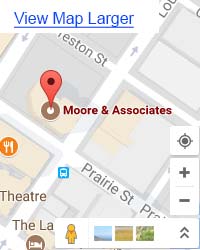
For many workers, cost is the biggest reason they delay calling. That is why contingency representation matters. A firm like Moore & Associates can evaluate whether a case qualifies for a no recovery, no fee arrangement, which lowers the barrier for employees who need legal help but cannot afford to pay upfront.
The Real Question: Is Your Employer Breaking the Law?
If you are searching for legal help, chances are this is not just a personality conflict at work. You are worried about money, your job, your reputation, or all three. You may already know your employer crossed a line. You may just need someone to confirm it.
That is where focused legal advice can change everything. The sooner you understand your rights, the sooner you can protect your wages, your evidence, and your next move. If your employer has been underpaying you, retaliating against you, or violating your workplace rights, getting answers now can make the difference between a strong claim and a missed opportunity.
You work for your paycheck. You work for your future. If your employer is trying to take either one from you, do not hand them more time to get away with it.